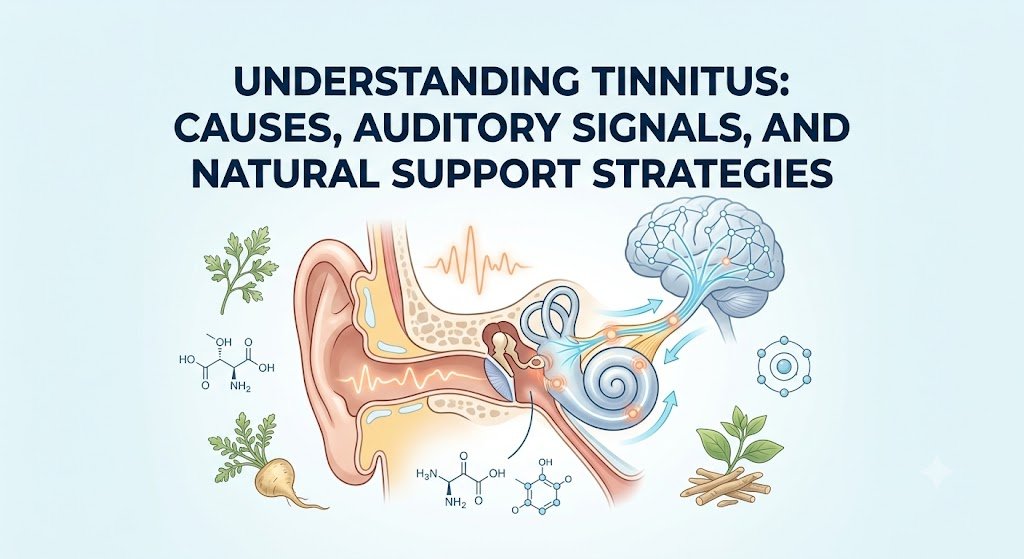
Persistent ear ringing, buzzing, or clicking affects millions of individuals worldwide. Commonly referred to as tinnitus, this phantom noise originates not from an external sound source, but from internal disruptions within the auditory system. Understanding the biological mechanisms behind tinnitus is essential for selecting effective natural management strategies and protecting long-term hearing clarity.
What Causes Tinnitus?
Tinnitus is rarely an isolated condition; rather, it is a symptom of underlying changes within the complex pathway connecting the inner ear to the brain.
- Damage to Inner Ear Hair Cells: Tiny sensory hair cells inside the cochlea move in response to sound waves, triggering electrical signals along the auditory nerve. When exposed to loud noises, aging, or reduced blood flow, these delicate cells can become damaged, sending erratic signals to the brain that are interpreted as constant ringing. According to a NCBI study on peripheral tinnitus mechanisms and hair cell loss, oxidative stress directly contributes to sensory hair cell apoptosis and auditory pathway degradation.
- Auditory Nerve Misfiring: The auditory nerve acts as the electrical wire transmitting sound information to the brain’s auditory cortex. When neural pathways suffer from oxidative stress or nutrient deficiencies, signal transmission degrades, generating phantom sound perception. Learn more about restoring these pathways in our guide to the science of auditory nerve repair.
- Poor Microcirculation: Adequate blood flow ensures inner ear structures receive continuous oxygen and vital nutrients. Reduced microcirculation can compromise sensory cell performance and exacerbate auditory discomfort. To structure a proactive daily routine, follow our sustaining hearing acuity plan.
- Neuroinflammation & Stress: Elevated stress levels and neuroinflammation impair neural signaling and heighten brain sensitivity to tinnitus frequencies, creating a continuous cycle of discomfort.
A Multi-Pathway Approach to Auditory Relief
Managing tinnitus effectively requires addressing the root physiological factors contributing to inner ear distress:
- Nerve Pathway Repair: Supplying essential neuroprotective nutrients helps repair neural connections and calm erratic electrical signals traveling from the ear to the brain.
- Antioxidant Protection: Neutralizing free radicals shields fragile cochlear hair cells against progressive oxidative damage and age-related hearing decline. Research published in an NCBI clinical trial on antioxidant therapy for tinnitus indicates that targeted antioxidant supplementation significantly reduces subjective discomfort and tinnitus loudness.
- Enhancing Blood Flow: Promoting healthy microcirculation ensures optimal nutrient delivery to delicate auditory tissues.
How Quietum Plus Supports Tinnitus Management
Quietum Plus is an all-natural supplement formulated to support healthy hearing by targeting the root contributors to tinnitus. For a detailed breakdown of the complete formula, explore our Quietum Plus ingredients and auditory health guide.
| Target Mechanism | Key Ingredients | Primary Benefit |
| Nerve & Neural Repair | Mucuna Pruriens, Dong Quai, L-Tyrosine | Nourishes the auditory wire, stabilizes neurotransmitter activity, and reduces neural misfiring. |
| Microcirculation | L-Arginine, Catuaba Powder, Hawthorn Berry | Enhances localized blood flow to deliver vital oxygen and nutrients to inner ear cells. |
| Antioxidant & Anti-Inflammatory Shield | Ashwagandha, Maca Root, Ginger, Skullcap | Combats oxidative stress, reduces neuroinflammation, and calms the nervous system response. |
By working synergistically from within, Quietum Plus helps restore natural harmony between the ears and brain, reducing phantom ear noises and promoting clearer, calmer hearing over time.